
Here’s how to look after your Hank’s True BBQ™ offset smoker and keep it in top shape for many years.
First of all: congratulations! You’ve chosen a solidly built offset smoker that will be your companion in the outdoor kitchen for many years to come. Below are some general tips on storage, care and other things that are good to know.
Storage
A substantial piece of equipment like this needs to be stored somewhere when it isn’t in use. A common question I get is: can it stay outdoors? Absolutely. It has been treated with oil to withstand moisture. It will keep its fine surface if you continue to apply a thin layer of oil every 4th time you use it. However, I do recommend keeping it under a roof to reduce the wear from wind and weather. Don’t cover it with plastic or similar covers, since covers collect moisture. Free airflow is better.
Surface treatment
The smoker is built from 1/4″ (6.35 mm) steel. Since this is untreated steel, the smoker has been given a surface treatment: it has been coated with rapeseed (canola) oil. You can use rapeseed, peanut or sunflower oil. All three work equally well, and for a good reason: they withstand high temperatures.
Why?
The smoker is treated like a cast iron pan. You apply a thin layer of oil and then heat up the smoker to burn the oil into the steel. Besides giving good protection against rust and moisture, this also creates a very nice patina. The process is called polymerization. When the oil is heated, it transforms and bonds molecularly to the steel. As the process is repeated, the protection gets better.
When?
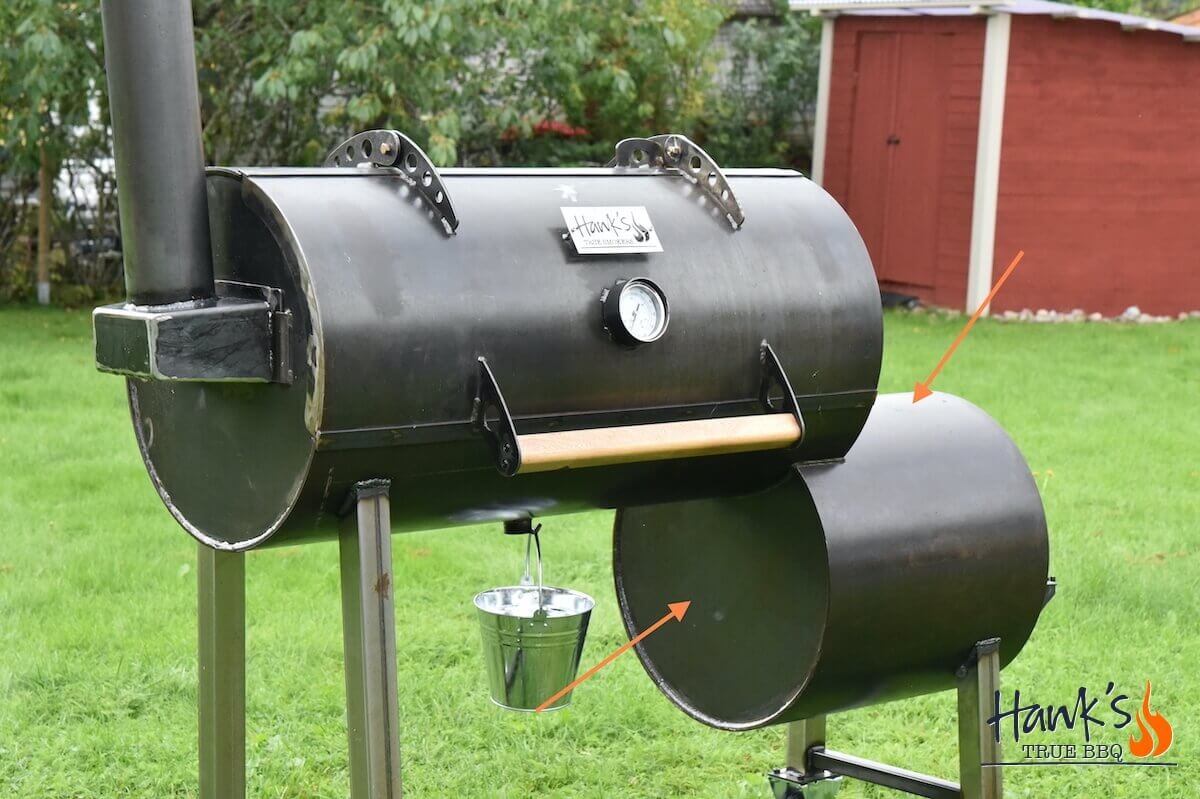
I recommend doing this every 3rd or 4th time you use the smoker. Important: do it before use. The part exposed to the widest temperature range is the firebox. I usually apply oil on top of the firebox and on the back/outside of the firebox (that is, ‘under’ the cooking chamber), see the picture below. The entire smoker needs treatment far less often; usually it’s only the firebox that needs extra treatment.
How?
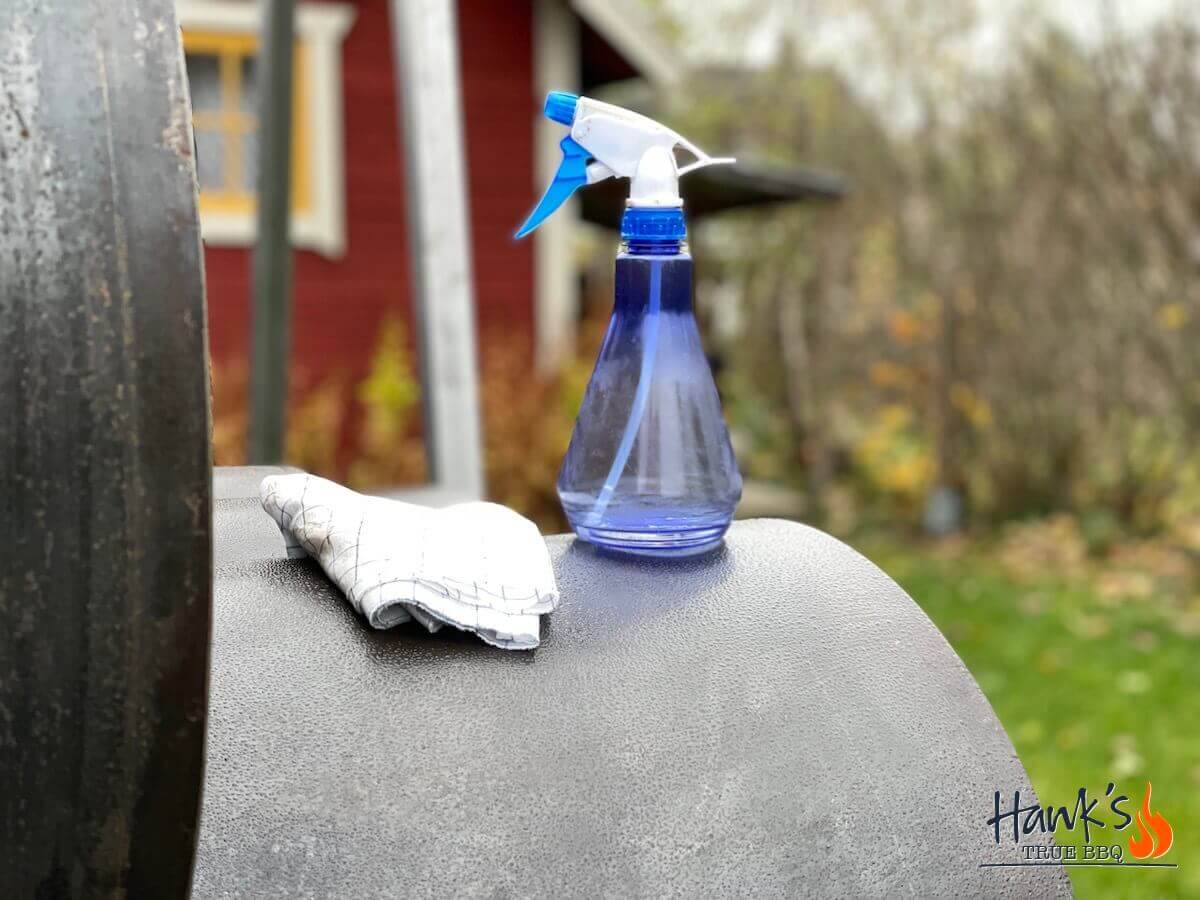
I use a cheap plastic spray bottle, the kind you can pick up for next to nothing at any discount store. Pour in 2-3 dl (about 1 cup) of oil and spray it directly onto the smoker. Spread it into a thin layer with an old rag or a torn-up bedsheet, and wipe off any excess oil. Now light the smoker and keep it going for about 2 hours at 120-130° C (250-265° F). It needs to run for a while, partly because it takes time to heat up the smoker itself, and partly to burn in the oil.
That’s why I recommend doing it right before you’re going to use it. It takes 30-60 seconds at most, and then the oil burns in while you’re cooking your food anyway. Neat!
Cleaning
Yes, boring as it sounds, this needs doing now and then. First up is the ash. After a number of fires, some ash collects at the bottom of the firebox, and grease and deposits build up inside the smoker.
Firebox
Ash binds moisture very well, and it’s corrosive. That’s why I recommend emptying out the ash 24 hours after the fire has gone out. Wait the 24 hours to make sure there are no embers still smoldering. The easiest way is to take out the firebricks and then simply sweep out the firebox. Since the bottom is completely smooth, I put an ash bucket underneath and sweep the ash down into it.
Grates
Grates are most easily cleaned with “elbow grease”, meaning you roll up your sleeves and go at them with a wire brush. You can do this as often or as rarely as you feel like, but a classic wire brush always gets the job done.
Interior
The interior is the part I clean least often. After many uses, soot and carbon deposits build up inside. They’re most easily scraped off with a putty knife. Scrape down the loose grime and sweep out the smoker with a small brush.