
A gas grill is really convenient since it starts really quickly and is so easy to regulate. Most grills have several burners so you can have different temperatures in different parts of the grill. This is perfect for true barbecue where we utilize indirect heat.
So, what’s the difference between a gas grill and a charcoal grill? Well, there are a few, not including ease of use. Since gas grills are designed to run with all burners on full speed with the lid closed, they are well ventilated. There are usually a bunch of thin ventilation holes at the back of the lid. This is of course great from a security perspective, but it is also something to take into consideration when doing long cooking sessions or even smoking meat. When smoking on a kettle grill I always place the top vent opposite of the meat to force hot air and smoke over it before exiting.
Modify ventilation holes
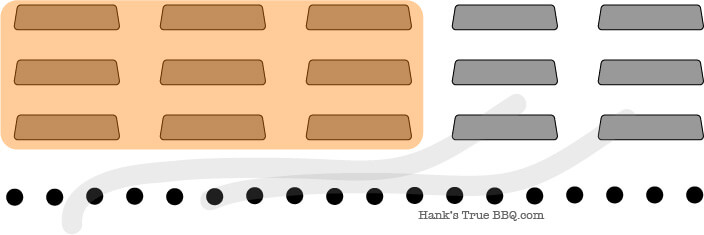
With so many ventilation holes the heat and smoke goes out the back (literally) very fast. You can seal some of them up (either the left or right half), using heat resistant material to force hot air and smoke to move to one side before exiting. This will make it easier to keep temps (gas lasts longer), and will infuse more smoke flavor into the meat. NOTE: check with manufacturer’s warranty before you start modifying your grill.
Add moisture
Since air travels through the grill relatively fast it also mean moisture leaves the grill pretty fast. There is an advantage to using a (disposable) water pan to compensate for this. A water pan is a simple aluminum pan filled with hot water. You place the pan directly over a burner so the water slowly evaporates and increases the air humidity in the grill. Don’t fill it all the way up, leave a 1/2 inch gap.
Wood for smoking
You can do smoking in a gas grill just fine. As usual you have wood chips and wood chunks available, where chunks are the larger pieces.
Smoking with wood chunks
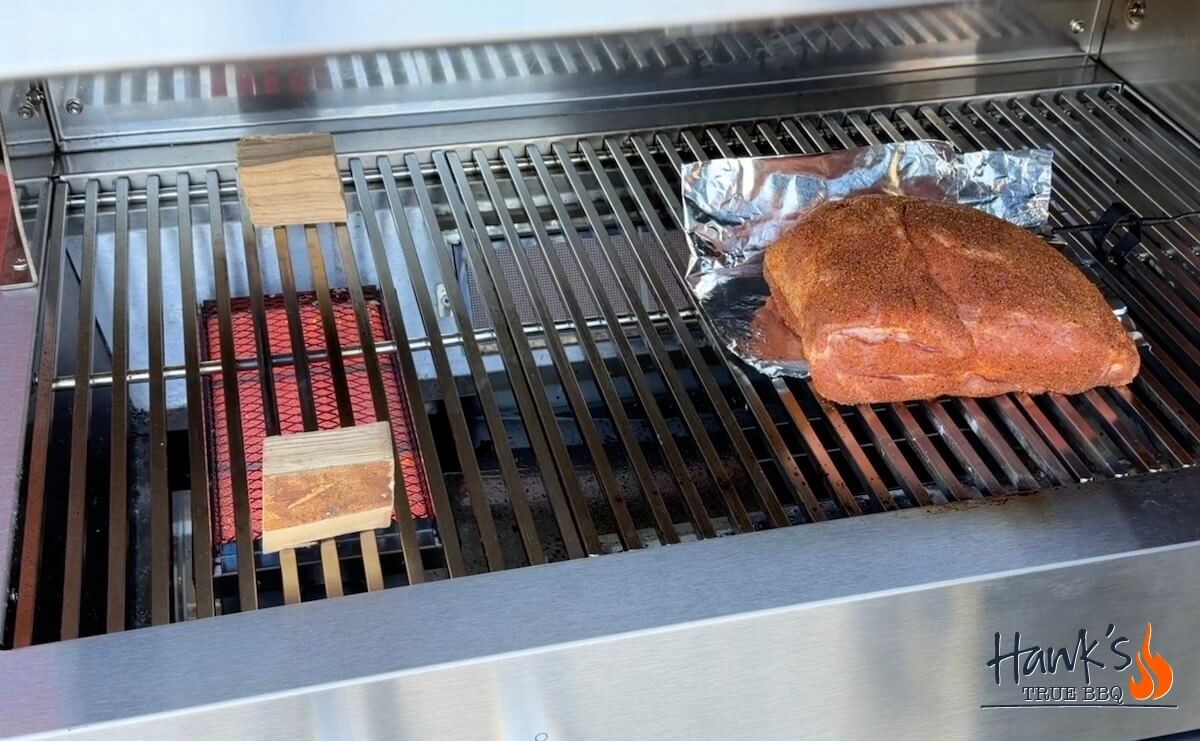
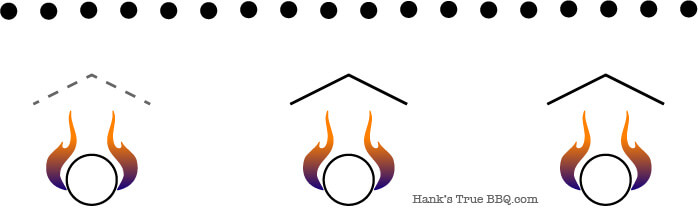
I prefer using wood chunks, I simply place them directly on the grates. Start with a 2-3, and see when you need to refill. The trick with wood chunk is to have them smoulder, but not catch fire fully. If they do you will have to refill very often. See the photo at the top of the page. I have turned on the burner to the left, but the others are set to the off position. This creates a 2 zone setup.
Place the wood chunks on the grates, offset 1 inch from the open flame. Wait a few minutes for them to smolder and generate smoke.
What do you do if this doesn’t happen?On most if not all gas grills each burner is covered by a V-shaped piece of metal. It is there to protect the burners from dripping fat and meat juice. On some gas grills the distance between burners and grill grates is too far, or the V-shaped metal blocks the heat too well. What I do is remove the metal cover over the one burner (use gloves!) that is on fire. It’s not needed since we won’t place food over it anyway, just wood and a water pan. This allows the heat from the flames to reach the aluminum pan and set fire to the wood chunks.
If you’re unsure of the difference between wood chunks and wood chips, or want to know more about what type of wood to use when smoking, read more here. Depending on the size of wood chunks you put on the grates they may affect temperature. Keep an eye on the thermometer to make sure the temp stays where you want it.
Hi,
Great post. I’ve been struggling with all the openings of my napoleon gas grill, as you mentioned in your post. What do/did you use to close of the huge gap in the back of the BBQ?
Best regards,
Bart
Hi Bart!
It depends on the type of grill, how willing one is to modify it et.c. But for starters, just aluminum foil, or anything that you can affix to the inside of the lid that resists heat. Depending on the vent holes/placement you can get a thin piece of sheet metal (0.5 mm thick, from Home Depot or similar) and simply put some screws through the vent holes to hold it in place. Think “McGyver” 🙂